Can you get health insurance in your 60s and 70s?
Yes. Age on its own rarely stops you buying private medical insurance. Several insurers state that they have no upper age limit for new members, and others accept joiners well into their 70s or 80s. What changes as you get older is the price, the health questions you're asked, and how much of your medical history ends up excluded.
Joining ages by insurer
This is what each insurer states on its own website or policy documents (checked October 2026). Where an insurer doesn't publish a limit, we say so rather than guess.
| Insurer | Maximum joining age | Notes |
|---|---|---|
| Bupa | No upper age limit | |
| Saga | No upper age limit | Aimed at over-50s; underwritten by Bupa |
| WPA | No maximum | Full medical underwriting and at least a £500 excess if you join at 66 or over |
| National Friendly | 85 | My PMI runs on a five-year contract |
| Vitality | 79 | Plan holder and partner must be 18 to 79 at the start date |
| Freedom | 70 | Existing members can keep their cover indefinitely |
| AXA Health | Not published | Extra health questions by phone from age 75 |
| Aviva | Not published | Ask for a quote to check |
| The Exeter | Not published | Ask for a quote to check |
If you're close to a limit, it can be worth arranging cover sooner. Once you're a member, most insurers keep renewing your policy each year as you get older.
What health insurance costs at 60, 70 and 80
Premiums rise with age because older people claim more often and for more expensive treatment. Two recent sets of figures give a realistic picture.
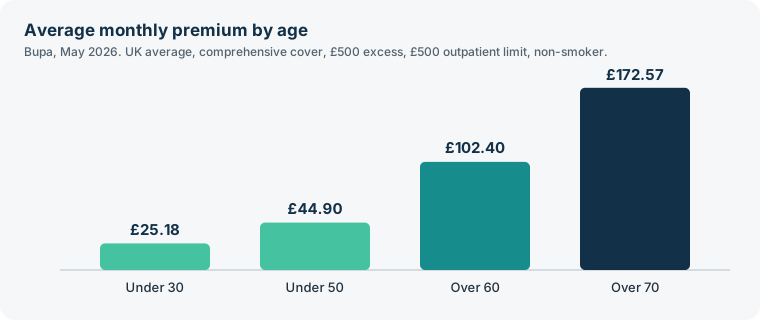
Bupa, May 2026 (UK average, comprehensive cover, £500 excess, £500 outpatient limit, non-smoker):
| Age | Average monthly cost |
|---|---|
| Under 30 | £25.18 |
| Under 50 | £44.90 |
| Over 60 | £102.40 |
| Over 70 | £172.57 |
Which?, June 2026 (quotes via LifeSearch for core cover, single non-smoker, Oxfordshire postcode, £250 excess):
| Age | Monthly cost |
|---|---|
| 30 | £32.81 |
| 60 | £80.96 |
| 70 | £126.88 |
| 80 | £177.66 |
Comprehensive cover in the same Which? research reached £280.11 a month at 80. Your price will differ depending on where you live, your health, the excess you choose and which benefits you include. For a personalised estimate, try our health insurance cost calculator.
Extra checks for older applicants
Some insurers ask more questions as you get older:
- WPA requires full medical underwriting if you join at 66 or over, so you complete a health questionnaire and any exclusions are written into your policy from the start. It also sets a minimum £500 excess.
- AXA Health asks some further questions by phone if you're 75 or older.
- Vitality won't accept a new plan holder or partner over 79.
None of this stops you getting cover, but it can affect which insurer suits you best.
Pre-existing conditions in later life
By your 60s or 70s, most people have some medical history: high blood pressure, joint pain, a past operation. How insurers treat it depends on the underwriting:
- Moratorium: conditions you've had in the last five years are excluded until you've gone a continuous period (usually two years) after joining without symptoms, treatment or advice for them.
- Full medical underwriting: you declare your history up front and the insurer lists any permanent exclusions.
Long-term (chronic) conditions such as diabetes or high blood pressure are excluded under both. Our guide to health insurance with pre-existing conditions explains the options in detail.
How to keep the cost down
You can bring the premium down a long way without losing the cover that matters most:
- Choose a higher excess. Saga offers excesses from £100 to £1,000, and a higher excess usually means a noticeably lower premium.
- Add a six-week option. If the NHS can treat you within six weeks, you use the NHS; if not, your policy pays. Saga offers both four-week and six-week versions.
- Narrow the hospital list. Leaving out the most expensive central London hospitals can save money if you don't live nearby.
- Lower the outpatient limit. Keeping full inpatient and cancer cover but capping outpatient consultations and tests cuts the cost.
- Look after your no-claims discount. Saga's discount usually starts at 35% and can rise to 60%, with an option to protect it for one claim.
Is it worth it?
The treatments people most often need in later life, such as hip replacements, knee replacements and cataract surgery, are also the ones with long NHS waits. Health insurance can get you treated quickly. But at £100 to £250 a month, a policy can cost more over a few years than paying for one operation yourself. Compare the premium with the self-pay price of the treatment you're most worried about, and read our guide to self-pay vs health insurance.
Sources
- Bupa: Health insurance and How much does health insurance cost?
- Saga: Health insurance for over 60s and FAQs
- WPA: Complete Health FAQs
- Vitality: Health insurance
- Freedom: Private health insurance for over 50s
- AXA Health: Over-50s health insurance
- National Friendly: My PMI policy summary
- Which?: Private health insurance costs by age
- MoneyHelper: Do you need private medical insurance?
Questions and answers
Can I get private health insurance at 70?
Yes. Bupa, WPA and Saga state that there is no maximum joining age, National Friendly accepts adults up to 85, and Vitality accepts plan holders up to 79. Some insurers ask extra health questions or require full medical underwriting for older applicants. WPA, for example, requires full medical underwriting and a minimum £500 excess if you join at 66 or over.
Can I get health insurance at 80?
It is possible. Insurers that set no upper age limit, such as Bupa, WPA and Saga, can still quote, and National Friendly accepts joiners up to 85. Expect a high premium: Which? found core cover for an 80-year-old cost around £178 a month in June 2026, and comprehensive cover around £280.
How much does health insurance cost for a 70-year-old?
Bupa's May 2026 figures put comprehensive cover for over-70s at about £173 a month on average across the UK (with a £500 excess and £500 outpatient limit). Which?'s June 2026 quotes for core cover at age 70 were around £127 a month. Your own price depends on your postcode, health, excess and the options you choose.
Will my premium keep going up every year?
Usually, yes. MoneyHelper notes that premiums rise every year and with age, on top of any rise in medical costs. Most policies are annual contracts, so taking cover out earlier doesn't lock in today's price. It does mean you're already a member when joining gets harder.
Will my policy stop when I reach a certain age?
Joining age limits apply when you first take out cover. Most policies renew each year automatically, and Freedom states in writing that you can keep your existing cover indefinitely after you pass its joining age of 70. Check the renewal terms of any policy you're considering.
Are pre-existing conditions covered for older people?
The same rules apply at any age. Conditions you've had symptoms of, or treatment for, in recent years are usually excluded, either for a set period (moratorium) or permanently (full medical underwriting). At 60 or 70 most people have some medical history, so the type of underwriting matters more than it did when you were younger.
What is the cheapest way to get health insurance in your 60s?
The biggest savings usually come from a higher excess, a six-week NHS wait option, a narrower hospital list and a lower outpatient limit. Saga, for example, offers four-week and six-week wait options and excesses from £100 to £1,000. A cash plan or paying for treatment yourself can also make sense if a full policy is out of reach.
Is it worth getting health insurance in my 70s?
It depends on your budget and what you want it for. Your 70s are when hip and knee replacements, cataract surgery and diagnostic scans are most likely, and NHS waits for these can be long. But a premium of £150 to £250 a month adds up quickly, so compare it with the self-pay cost of the treatments you're most likely to need.
Insurers worth comparing
Further reading
- Self-Pay vs Health Insurance: Which Is Cheaper for a One-Off Procedure?
- Why Are Private Health Insurance Premiums Rising in 2026?
- Moratorium vs Full Medical Underwriting: How Health Insurance Actually Works