Why people switch
Health insurance premiums usually rise every year, partly because you're a year older and partly because medical costs are rising. MoneyHelper notes that premiums go up every year and with age. A large renewal increase is the most common reason to shop around, but people also switch for better cover, a different hospital list or a policy that suits a change in their life.
Switching can save money, but the way you switch matters more than the price.
The three ways to switch
When you move to a new insurer, you'll usually be offered one of three underwriting options.
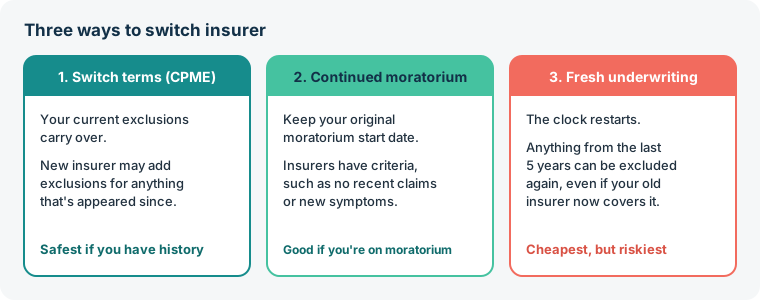
1. Continued personal medical exclusions (CPME), or "switch" terms. Your current exclusions carry over to the new policy. Anything your current insurer covers, the new one will too, but the new insurer may add exclusions for conditions that have appeared since you joined. This is usually the safest way to switch if you have any medical history.
2. Continued moratorium. If your current policy is on a moratorium, you can often keep the same start date. Vitality says you can usually switch providers on the same basis, and Bupa lets eligible switchers keep their moratorium start date with no break in cover.
3. Fresh underwriting. You start again with a new moratorium or full medical underwriting. This can give the lowest price but carries a real risk: anything you've had symptoms of, or treatment for, in the last five years becomes pre-existing again. AXA's moratorium, for instance, only covers a pre-existing condition after two years in a row as a member without treatment, advice, medication or a special diet for it.
Saga offers all three options. Not every insurer does, so ask which bases are available before you get a quote.
When to switch
Renewal is the natural time. You can switch at any point, but cancelling mid-year can mean admin or cancellation fees from your current insurer. A good routine:
- Look at your renewal price as soon as it arrives, usually a few weeks before the renewal date.
- Get comparable quotes on switch or continued moratorium terms.
- Check the new policy's exclusions, hospital list and limits against your current one.
- Set the new policy to start the day after the old one ends, so there's no gap.
- Only then cancel, or let lapse, your current policy.
If you're claiming or having treatment
Wait until your treatment has finished. A new insurer won't take on treatment that's already under way, and most will see a recent claim as a reason to exclude the condition. Freedom says you can switch "as long as you don't have any ongoing claims", and Aviva says that if you're having treatment you're unlikely to meet its switching criteria. Bupa notes that switching is harder if you've claimed, had NHS treatment or had new symptoms in the last five years.
Your no-claims discount
We haven't found any insurer that says it will honour a no-claims discount earned elsewhere. In practice, your discount restarts on the new insurer's own scale. Saga's, for example, usually starts at 35% and can rise to 60%, while The Exeter has 15 levels up to 75%. If you have a high discount now, factor this into the comparison.
Your cooling-off rights
The FCA's rules give you at least 14 days to cancel a new health insurance policy. The period runs from the later of the day cover starts and the day you receive the terms. If you cancel, the insurer can charge only for the cover you've already had, and not as a penalty. Some insurers give longer: WPA, The Exeter and National Friendly offer 30 days.
Checklist before you switch
- How will my existing conditions be treated (CPME, continued moratorium or fresh underwriting)?
- Are there any new exclusions in the quote?
- Is my preferred hospital on the new insurer's list?
- Are the outpatient, cancer and mental health limits at least as good?
- Will my current insurer charge a fee if I leave mid-year?
- Does the new policy start the day after the old one ends?
- Have I finished any treatment and closed any claims?
MoneyHelper warns that getting a better deal elsewhere can become harder as you get older or develop new conditions, so if you're happy with your cover, it can be worth asking your current insurer about options to reduce the premium first, such as a higher excess or a six-week option.
Sources
- Vitality: Switching health insurance
- Bupa: Switching health insurance
- Aviva: Switch health insurance
- AXA Health: Can I change my health insurance between providers?
- Freedom: Switch health insurance
- Saga: Health insurance FAQs
- The Exeter: Health+ policy document
- FCA Handbook: ICOBS 7.1 and ICOBS 7.2
- MoneyHelper: Do you need private medical insurance?
Questions and answers
Can I switch health insurance if I have a pre-existing condition?
Usually, yes. Many insurers accept switchers on "continued personal medical exclusions" (CPME) terms, also called switch terms, which carry over your existing exclusions rather than starting fresh. The new insurer may add exclusions for anything that's developed since, so check the terms in your quote. If you've recently claimed or had treatment, your options may be narrower.
Will I lose cover for conditions if I switch?
You can, if you switch on fresh underwriting. A new moratorium treats anything you've had symptoms of, or treatment for, in the last five years as pre-existing, even if your current insurer now covers it. Switching on CPME or continued moratorium terms avoids this.
Can I keep my moratorium when I switch?
Often. Vitality says you can usually switch providers on the same basis, and Bupa lets eligible switchers keep their moratorium start date. Insurers have criteria, such as no recent claims or new symptoms, so ask before you cancel your current policy.
When is the best time to switch health insurance?
At renewal. You can switch at any time, but leaving mid-year can mean admin or cancellation fees. Start comparing a few weeks before your renewal date and make sure the new policy starts the day after the old one ends, so there's no gap.
Can I switch if I'm in the middle of a claim?
It's usually best to wait until your treatment has finished. Freedom says you can switch as long as you don't have any ongoing claims, and Aviva says that if you're having treatment it's unlikely you'd meet its switching criteria. A new insurer won't pick up treatment that's already under way.
Can I take my no-claims discount to a new insurer?
We haven't found any insurer that says it honours a no-claims discount earned with a previous insurer. Discounts generally start again on the new insurer's own scale. Saga's, for example, usually starts at 35%. Weigh this against the saving before you move.
What paperwork do I need to switch?
Usually your current policy schedule or a certificate from your current insurer showing your cover start date and any exclusions. Aviva, for example, asks for your previous insurer's certificate within 21 days of starting.
Can I cancel a new health insurance policy if I change my mind?
Yes. FCA rules give you at least 14 days to cancel a new health insurance policy, starting from the later of the start date or the day you receive the terms. Some insurers give longer: WPA, The Exeter and National Friendly offer 30 days. The insurer can charge only for the cover you've already had.
Insurers worth comparing
Further reading
- Moratorium vs Full Medical Underwriting: How Health Insurance Actually Works
- Why Are Private Health Insurance Premiums Rising in 2026?
- Pre-Existing Conditions and Health Insurance: What's Covered, What Isn't